
Painting a Victorian House


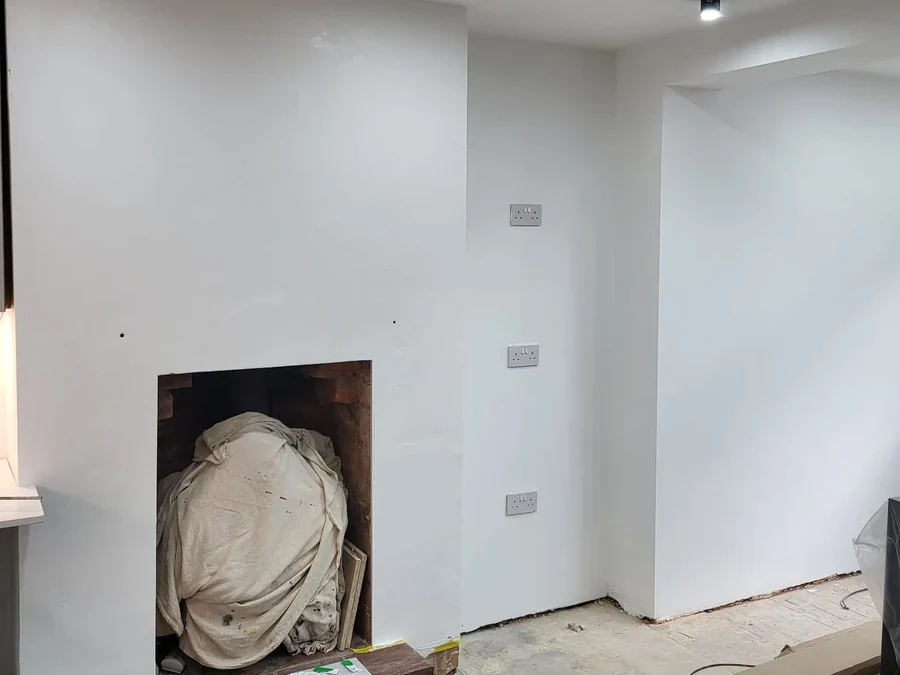
Own a Victorian house in Coventry and the paint keeps blistering or the plaster keeps blowing?
This guide covers why period walls fail, what to paint them with instead, and how to deal with what a previous owner already did.
Six things decide what belongs on a Coventry period wall, and what should never go near one.
- Is your house Victorian or Edwardian?
- Why does my paint keep blistering or peeling?
- What paint should I use on solid walls?
- What if a previous owner got it wrong?
- Can my original sash windows be saved?
- When should exterior work be done in Coventry?
Call 024 7542 6652 today and speak to Ryan, the local decorator who works to how Coventry’s period houses were built.
Reviews From Coventry Customers


The place is now like a new house.
I am immensely grateful for his expertise and dedication regarding his work.
Definitely recommend.
How Godiva Decorators Works
Godiva Decorators works with a local, Coventry-based painter and decorator. When you call, you speak to Ryan directly, and you arrange the quote and the work with him.
- Call and speak to Ryan — the decorator who does the work, not a call centre.
- Tell him about the job — the rooms, the timing and anything you are unsure about.
- He visits and sends a written quote setting out the work before anything is booked.
- You agree the work directly with Ryan, including the schedule and the final walkthrough.
Why Choose Godiva Decorators
Materials matched to the build
Breathable paint on solid and lime-plastered walls. Repairs use lime, not hard modern filler.
Original joinery repaired
Sashes get spliced, not binned. Doors and mouldings are brought back wherever possible.
Quoted after a visit, never a photograph
What is already on the wall sets the preparation. That is most of the price on a period house.
Local to Coventry’s period streets
Godiva Decorators covers Coventry, including its conservation areas.
Is Your House Victorian, or Edwardian?
“Victorian” gets used loosely for any older house. The two periods were built a little differently, and that matters for some of the advice below. Victoria reigned until 1901. The style linked to Edward VII carried on past his own reign, up to the First World War.
A few general markers help. Victorian terraces tend to have narrower plots and smaller sash windows, often with many small panes. Ridge tiles or bargeboards are usually more ornate. Edwardian houses tend to be wider-fronted, with larger sash windows in fewer panes. Render or pebbledash on the upper floor, over brick below, is common too.
Both eras built with solid walls, in lime mortar and lime plaster. Cavity construction did not become standard until after the First World War. The breathability advice on this page applies to a house from either period.
Why Do Period Walls Need to Breathe?
A house built before about 1919 almost certainly has solid walls with no cavity, bedded in lime mortar and finished in lime plaster. It was never designed to keep water out entirely. It was designed to absorb water and then release it again, which lime does well because it is porous.
A modern house works the opposite way. A cavity keeps water out, a damp proof course stops it rising, and gypsum plaster and vinyl paint form a barrier. That works perfectly on the building it was designed for.
Put that modern system on an old wall and the water still gets in. Driving rain reaches it from outside, and cooking, washing and breathing add moisture from inside. The water can no longer get out, so it collects behind the paint film. What follows is predictable:
- Blistering and peeling in patches, usually low on the wall and worst on the elevation that takes the weather.
- Blown plaster, where the lime behind has softened and lost its key to the brickwork. It sounds hollow when tapped.
- Salting, a white crystalline bloom pushing through the paint as trapped moisture carries salts out of the brick.
- Damp that moves. Water blocked in one place finds another, which is why sealing one wall often produces a problem on the next one.
None of that means an old house is fragile. It means the materials have to match the construction, and when they do these walls last for another century.
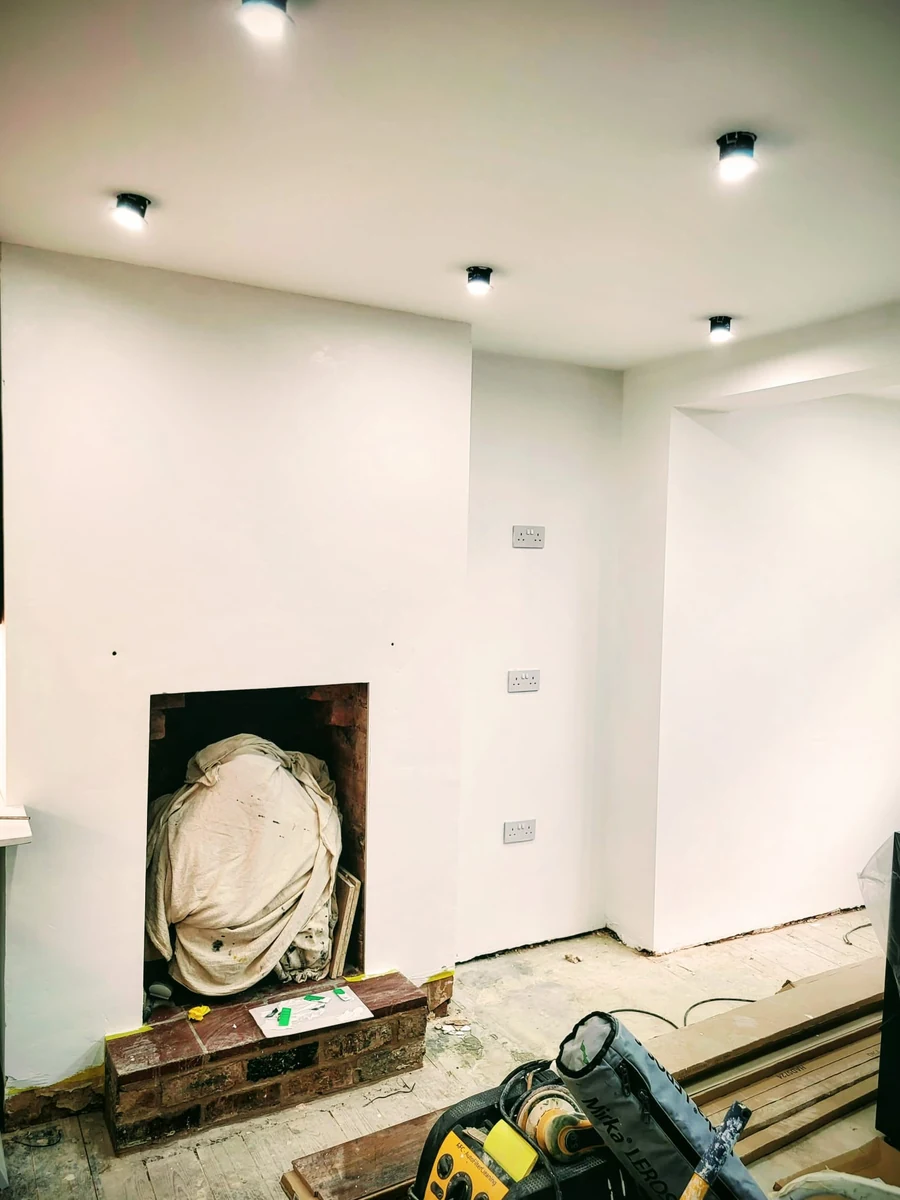
What Should You Use on Solid and Old Plaster Walls?
Choosing what to put on a period wall in Coventry starts with the category, not the brand. The category matters far more than the label on the tin.
Inside, on lime plaster: a breathable mineral or clay-based paint. Distemper, limewash, silicate and modern clay emulsions all let vapour pass. Standard vinyl matt is the one to avoid. Vinyl silk is worse again, because the sheen comes from an even tighter film.
Inside, on sound gypsum over an old wall: a low-vinyl matt emulsion. Where a previous generation has already replastered in gypsum, ripping it off is rarely proportionate. A contract or trade matt with little or no vinyl is the sensible compromise.
Repairs in lime, not gypsum filler. A hard modern filler in a soft lime wall cracks around its edges within a season, because the wall moves and the filler does not. Lime putty or a lime-compatible filler moves with it.
Outside, on render or masonry: a breathable masonry paint. Mineral and silicate masonry paints let the wall dry out. Standard plastic masonry paint on a solid wall is the exterior version of the same mistake. It is the most common cause of blown render on Coventry terraces.
Woodwork: modern water-based systems are fine, and better than they were. On original joinery the finish is less important than the preparation underneath it. Where a traditional look matters, an oil-based eggshell still gives a depth water-based paints struggle to match. It takes far longer to dry.
Colour is a separate question from specification. Almost every breathable range now comes in whatever colour you want, so choosing a period-appropriate palette does not restrict you to a period product.
Got a general question about priming, or about painting over what’s already there? That’s on the page about hiring a painter and decorator.
Get My Free Quote
Call 024 7542 6652 and ask Ryan what your walls need.
Painting Over What Somebody Else Did Wrong
This is the most common real job in a period house, and it is almost never the current owner’s doing. Four situations come up again and again, and each has a different answer.
Very common
Vinyl Silk Over Lime Plaster
The wall cannot breathe and the plaster behind is often already soft. Where the plaster is sound, the film is stripped or abraded back and a breathable system goes on. Where it is blown, painting over it only hides the problem for a winter.
Assess first
Modern Filler in an Old Wall
Hard filler in a soft wall cracks in a ring around itself. Small repairs get raked out and redone in a lime-compatible filler. A whole wall of it is a plastering decision rather than a decorating one, and it is quoted as such.
Rarely reversible
Plastic Masonry Paint on Render
Where the render is still sound, the honest options are to keep repainting in the same family or to remove it. Removal is a big job. Where it has already blown, the render is the repair and the paint is the last step, not the first.
Preparation
Gloss Over Gloss Over Gloss
Decades of layers on original joinery lose the crispness of the mouldings and eventually crack in sheets. Bringing detail back means taking layers off rather than adding another. That is labour, and it is the largest single variable in a period quote.
In every one of the four, the decision is made on the wall itself rather than from a photograph, which is why period properties are quoted after a visit and not over the phone.
How Are Sash Windows and Original Joinery Handled?
Original sash and bay windows are still common across Coventry’s period streets. Earlsdon’s conservation area appraisal records many of them still in place. They are usually worth repairing. Repairing them is ordinary joinery and decorating work, not a specialist trade.
Repair beats replacement in almost every case. Victorian softwood was slow-grown and is denser than most modern timber. A sash with localised rot is usually cut out and spliced rather than thrown away, and the result outlasts a replacement.
Preparation is the job. Old paint comes off the moving faces and the meeting rails so the window still closes when it is finished. Layer on layer is why so many original sashes are painted shut, and taking that back is most of the labour.
Putty and glazing beads before paint. Failed putty lets water into the bottom rail, which is where sashes rot first. New putty needs to skin before it takes paint, which adds days to the programme rather than hours.
Paint carries onto the glass by a millimetre or two. That is deliberate. It seals the joint between putty and glass, and a line cut short of the glass is where water gets in.
Cords, weights and staff beads. If a window is being stripped back anyway, it is the cheapest time to replace tired cords, because the beads are already off.
Do not paint the runs. The channels the sash slides in are waxed or left bare. Painted, they bind, and the window that worked before the decorator arrived does not afterwards.
Godiva Decorators works with a period property decorator for Coventry. He has dealt with sash windows and lime-plastered walls like these, not just the theory.
Get My Free Quote
Call 024 7542 6652 and tell Ryan which sashes stick, then get a written quote.
When Should Exterior Period Work Be Done in Coventry?
Exterior work has a season, and in this city the reason is measurable. Coventry averages around 740 mm of rain a year, is wettest in October, and carries high humidity through the winter.
That is the honest constraint, not a sales one. Masonry paint and exterior woodwork paint both need the surface dry and the air above about 10°C to form a proper film. Below that, water-based products effectively stop curing. Paint applied in the wrong conditions can stay soft for weeks and fail in its first winter.
Late spring to early autumn is the working window. April through September, with the best conditions usually in May, June and September. October is the month to avoid on the rainfall figures alone.
A solid wall needs to be dry all the way through, not just on the surface. After a wet spell a masonry wall can look dry and still hold water behind the face. Painting it seals that in, and it is the same mistake as painting new plaster too early.
Which is why period exteriors get booked early. The window is narrow, and every decorator in the city is working to the same one. Asking about lead times in February for a June job is not premature.
Not sure what order the work should go in on your job? That’s on the page about what order to decorate a house in. It also covers how long each stage holds up the next.
Painting a Victorian House FAQs
Get My Free Quote
Call 024 7542 6652 and speak to a period property decorator for Coventry.
Get My Free Quote
Fill in the form below for a free quote: