
How to Hire a Painter and Decorator


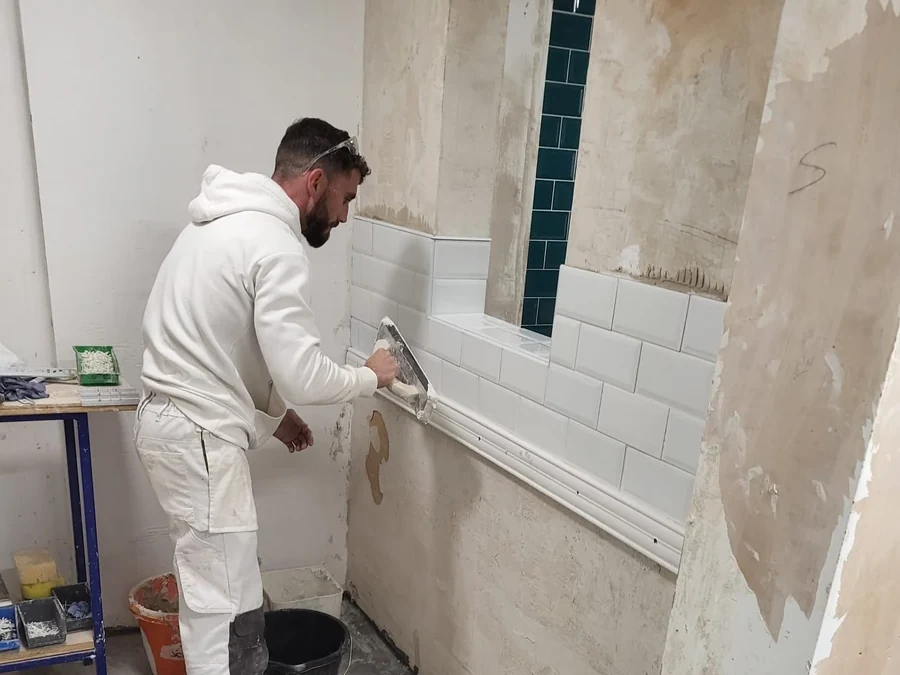
A decorator’s website only tells you so much. What tells you more is how they answer the questions below before you have to chase them for an answer.
If you are hiring a decorator in Coventry, these are the seven questions worth asking first. They start with trust and end with price.
- How do you know a decorator is any good?
- What should a quote include?
- What do decorators charge by the room?
- Why is the day rate a starting point?
- What does two coats mean?
- What deposit is fair, and who buys the paint?
- Why do decorators cost what they do?
Call 024 7542 6652 today and speak to Ryan, the local decorator covering Coventry.
Reviews From Coventry Customers
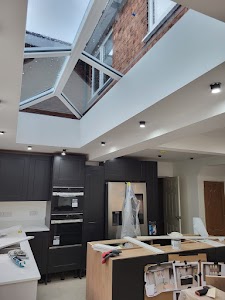


The place is now like a new house.
I am immensely grateful for his expertise and dedication regarding his work.
Definitely recommend.
How Godiva Decorators Works
Godiva Decorators works with a local, Coventry-based painter and decorator. When you call, you speak to Ryan directly, and you arrange the quote and the work with him.
- Call and speak to Ryan — the decorator who does the work, not a call centre.
- Tell him about the job — the rooms, the timing and anything you are unsure about.
- He visits and sends a written quote setting out the work before anything is booked.
- You agree the work directly with Ryan, including the schedule and the final walkthrough.
Why Choose Godiva Decorators
Everything above comes down to how Godiva Decorators works:
A written scope before you commit
Your quote lists the rooms, surfaces, preparation and coats before you see a number.
One local decorating partner
Godiva Decorators uses one trusted decorator for Coventry and the areas around it.
Full preparation every time
Preparation is never skipped to save time.
A walkthrough before sign-off
The job is checked room by room in daylight and anything outstanding goes on a written list at the time.
1. How Do You Know a Decorator Is Any Good?
Most people who hire a painter and decorator in Coventry are doing it for the first time. Two things separate a good decorator from a risky one, and neither shows up on a website.
Before you hire, notice this
A decorator worth hiring answers your questions before you have to chase them. They describe the preparation without being asked twice, and they put the scope in writing rather than promising a number over the phone. A decorator who does this properly will have answered most of the questions below before being asked.
About the work
- What preparation is included, and what happens to anything that needs filling or stripping? The most useful question on the list. Preparation is the invisible half of the job and the first thing to disappear when a price gets squeezed.
- How many coats, and what are they going over? Two coats over an existing similar colour is a very different job from two coats of white over dark green. One of those covers and one does not.
- Which products, by name and finish? Trade emulsion is not an answer. A brand, a product line and a sheen level is.
- Who is on site, and are they employed or subcontracted? Worth knowing whether the person quoting is the person painting.
- How long, and which days? A start date without an end date is not a plan, and a job that runs over is the most common source of friction.
About the money
- Is this a fixed price or a day rate, and what would change it? Both are legitimate. What matters is which one you are agreeing to and what changes the price.
- What is excluded? Often the single most revealing question, because it is the only one that asks somebody to volunteer bad news.
- Who supplies the paint, and is trade discount passed on? Covered in full further down this page.
- What deposit, and what is it for? A deposit against materials being ordered is normal. A large deposit against nothing in particular is not.
- Is VAT included? A price that turns out to have twenty per cent added is the most common reason two quotes are not comparable.
About what happens afterwards
- How long does the job stay open for snags? Every job has a few. What matters is the window in which they get put right without an argument.
- What guarantee is given, and on what? A guarantee on workmanship is a different thing from a manufacturer’s guarantee on the paint.
Signs of a bad paint job
Runs, misses and brush marks still visible once the coats are dry are the clearest signs. So is paint on woodwork, floors or fittings that should have stayed masked, and patchy coverage where the old colour still shows through. Filler lines showing through fresh paint usually point to a preparation problem rather than a paint one.
It is also worth asking for the public liability certificate. Read the dates on it rather than just checking that it exists.
2. What Should a Quote Include?
When you have more than one quote in front of you, it is tempting to compare the totals first. Check whether they describe the same job before you compare the numbers. Two quotes are only comparable once they cover the same work, and they almost never do to begin with.
Two quotes for the same job can sit £900 apart, and the number alone will not tell you which one is wrong.
Nothing on a decorating quote is standardised. Some parts decide whether a finish lasts two years or ten. Those are usually the parts you cannot see once the furniture is back.
The quicker route is to line the quotes up on six points and see where they differ. Usually one or two lines account for the whole gap, and once they are visible the decision stops being a gamble. Every one of the six can be settled with a phone call, and a decorator who has quoted properly can answer all six from memory.
| Line them up on | What you are looking for |
|---|---|
| Rooms and surfaces | Are ceilings in? Woodwork? Inside the built-in wardrobes? The garage? |
| Preparation | Described in detail, or the single word prep? |
| Coats and colours | How many, over what, and does a strong colour change need an extra one? |
| Materials | Named products, and who is buying them |
| Making good and exclusions | Filling, caulking, stain blocking, and what is explicitly not included |
| Time and terms | Working days, start and finish, deposit, stage payments, VAT |
Once those six read the same on both quotes, the prices mean something. Until then, the cheapest quote is often just the shortest one.
A price that comes in well under the others is worth a direct question rather than a suspicion. Sometimes it is a smaller outfit with lower overheads, which is a genuinely good outcome. Sometimes it is one coat instead of two, or no preparation, and asking makes that clear in about a minute.
Quoting for a full property rather than one room in Coventry? What that job involves is on the page about decorating a whole house in Coventry.
A full written quote should also spell out more than a total. Here is what to look for, line by line.
The work
- Every room and every surface, listed. Walls, ceilings, woodwork, doors, radiators, the parts that are easy to assume
- The preparation, described in detail rather than just named as prep
- The number of coats, and what they are going over
- Products by name, with the finish for each surface
- Which furniture needs moving or covering before the start
The money
- One total, with VAT shown, and whether it is fixed or a rate
- What is included in the price and what is charged separately
- Deposit, stage payments and final payment, with what triggers each
- What happens to the price if something is found once the work starts
The dates and the aftermath
- Start date, working days, and expected finish
- Access, keys, parking and working hours
- The snagging window and how it works
- Any guarantee, and what it covers
- Insurance details
None of that is unusual to ask for. A decorator who quotes this way has written it out already, and one who has not will usually put it in writing when asked.
Get My Free Quote
Get a written scope before you compare any prices.
3. What Do Decorators Charge by the Day or Room in Coventry?
Godiva Decorators does not publish one Coventry day rate. Ryan quotes each job after seeing it rather than working from a fixed rate card, so there is no local figure to give here yet.
What follows instead is a national market estimate from Checkatrade, not his figure. Treat it as context, not a number to hold anyone to.
Their UK-wide data puts a decorator’s day rate at roughly £200 to £350. The wider regional range runs £140 to £430, depending on location and experience. An hourly rate typically works out around £32. A standard twelve-by-twelve room usually runs £350 to £800 all in, and preparation is most of what decides where in that range a job lands.
Every one of those figures moves with the same factors that shape a Coventry quote. Preparation, coats and how many rooms are booked in one visit all matter. A day rate on its own is not the total for a job, because a job takes however many days it takes. The honest number for your own house comes from someone looking at it and writing a scope against a price.
4. Why Is the Day Rate a Starting Point, Not Your Bill?
A day rate answers what one day costs. It does not answer what your job costs, because that depends on how many days it takes.
Godiva Decorators is a painting and decorating company covering Coventry. The day rate above is only a starting point until someone has looked at the room. Tell us what needs doing. Ryan will turn that into a written scope with a real number attached, rather than a multiple of a national average.
Get My Free Quote
Tell Ryan what your room needs and get a written price instead of a day-rate guess.
5. What Does Two Coats Mean, and What Counts as Proper Preparation?
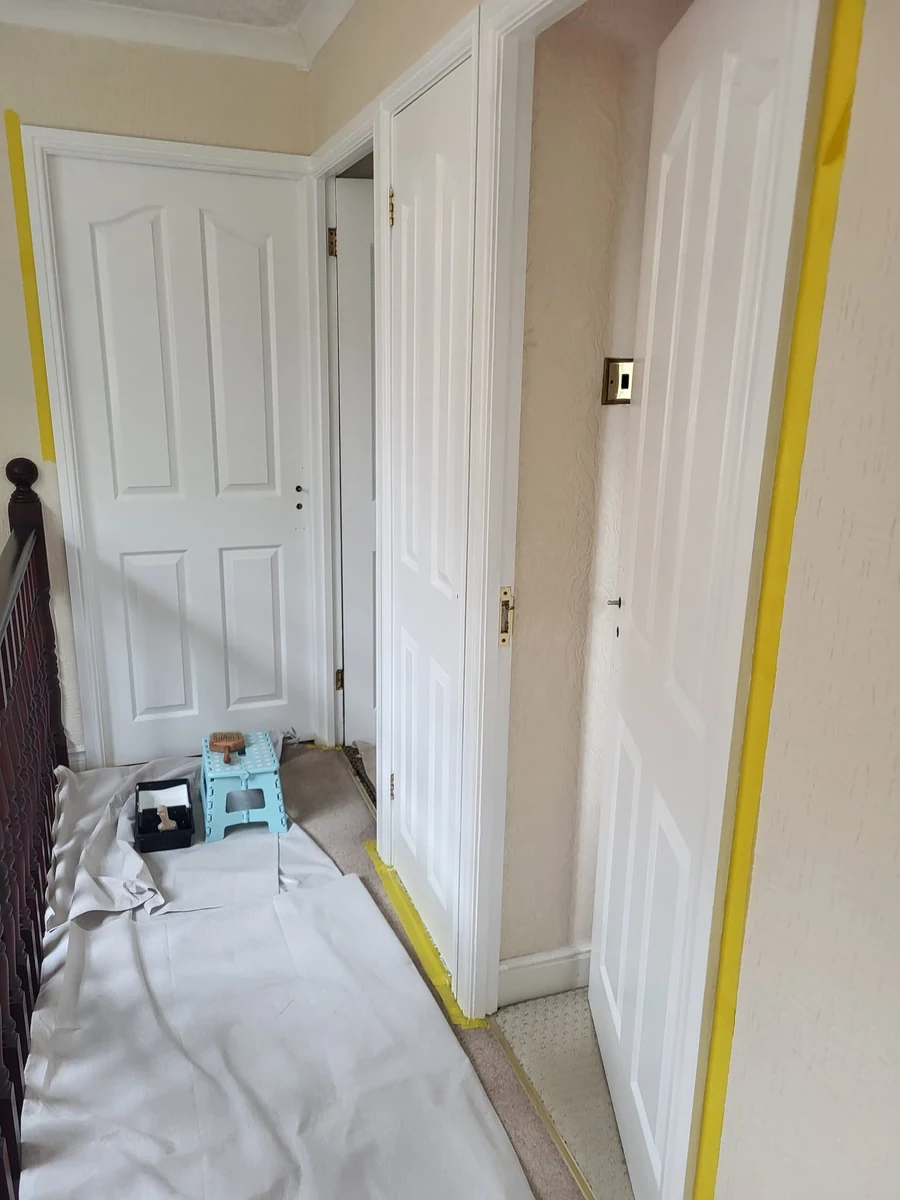
Two coats sounds like a standard and is not one. It describes how many times a roller passes the wall. It says nothing about what the wall was like beforehand, or what is underneath.
What it is going over. Two coats of a pale colour over an existing pale colour covers easily. The same two coats over dark or strong colour often will not, and the honest answer is three.
Whether a mist coat is being counted as one of them. New plaster needs a thinned first coat to seal it, and that is a primer rather than a finish coat. A quote saying mist coat and two coats describes more work than one saying two coats on the same wall.
Painting straight onto new plaster? The mist coat mix and timing are on the page about painting a wall after it has been plastered.
Whether the surface was prepared. Paint does not fix a wall, it copies it. Two coats over an unprepared surface produce a smooth, even, well-lit record of every flaw that was already there.
Preparation is the part that separates the quotes and the part nobody sees. On a typical older house it is:
- Filling and sanding, then sanding back old runs and brush marks
- Caulking the gaps where wall meets woodwork
- Washing down anything greasy, usually kitchens and around light switches
- Spot-priming bare patches and any new filler
- Stain-blocking anything that will bleed through, such as water marks or knots
- Taking the dust off before a brush is opened
That list is usually the majority of the hours, and none of it is visible in the finished room. Which is exactly why it is the first thing to go when a price is being cut to win a job.
Painting over paintwork that already exists. Sound paintwork in good condition just needs a light key and a fresh coat. Peeling or flaking paint has to come off first. If it does not, the new coat lifts with it. A chalky, powdery surface needs washing down and a stabilising primer before anything else goes on. Gloss or satin paint in good condition still needs a light sand, so the new coat has something to grip.
6. What Deposit Is Fair, and What Happens If You Are Not Happy?
Three practical questions come up on almost every job. What deposit is fair, and who buys the paint? What happens if you are not happy with the finish? None of them has one right answer, but each has a normal one.
Deposits
There is no legal standard and no industry rule, which is why the range in practice is so wide. What is consistent is the reason a deposit exists. Materials have to be bought before the work starts, and on a whole-house job that can be a significant sum in paint alone.
- A materials deposit at the start, roughly covering what has to be ordered before anyone arrives
- Stage payments during longer jobs, usually tied to something visible being finished rather than to a date on a calendar
- A balance on completion, paid after the walkthrough rather than before it, so the snag list is agreed while there is still a balance outstanding
A few signs are worth a second look:
- A large deposit requested before anything has been specified or ordered
- A cash-only arrangement
- No written quote
- Pressure to decide quickly
None of those is proof of anything on its own. Together they are a pattern, and paying by card or bank transfer at least leaves a record either way.
Who buys the paint
Both arrangements are common and neither is wrong. They carry different risks, and the only bad version is the one nobody agreed to in advance.
When the decorator supplies it, the right product turns up in the right quantity. Trade accounts usually mean a better price than retail, and there is nobody to blame but the decorator if the finish fails. The question to ask is whether the paint is charged at cost, at trade, or with a margin on it. Any of the three can be reasonable. Not knowing which is not.
When you supply it, you control exactly which brand and colour goes on your walls. You can also spend more on paint than a quote would have allowed. The risks are running short mid-job, buying a product that is wrong for the surface, and weakening any guarantee on the finish. A decorator can only stand behind a system they chose themselves.
If you are not happy with the finish
Every decorating job has a snag list. That is normal and not a sign anything has gone wrong. A professional job is not one with no snags. It is one where the snags get found and fixed before anybody signs it off.
The walkthrough is the mechanism. It happens in daylight, room by room, with both people present. Anything either of you is not happy with goes on a written list at the time, not in a text message a fortnight later. Then the list gets worked through, and the job is signed off only after that.
Reasonable is worth defining, because it is where most disputes sit. A finished wall is flat and even in the light it lives in. It is also free of runs, misses, brush marks and paint on surfaces that are not the wall. It is not laboratory-flat, and an old wall in a Victorian terrace will still read as an old wall. A decorator who explains that difference before starting is a better sign than one who promises perfection.
7. Why Do Painters and Decorators Cost What They Do?
A decorating quote can look expensive until you see what is inside it. Four costs make up almost all of the price. None of them is profit sitting on top.
Labour hours. Painting itself is usually the fast part of the job. Most of the time on site goes on preparation and masking. The drying time between coats adds more hours, and none of that time is a roller moving.
Preparation. Filling, sanding and caulking take longer than painting does. None of it shows in the finished room. Skipping it is the easiest way to cut a quote, and the fastest way to a finish that fails early.
Materials. Paint is not the only cost. Filler, caulk, primer, masking tape and dust sheets all add up across a whole property.
Insurance. Public liability cover protects your home if something goes wrong. A decorator without it is cheaper for a reason, and that reason is the one that matters if a mistake happens.
Is it worth paying for a decorator rather than doing it yourself? Time is the honest answer. A trained decorator works faster. The finish also holds up for years rather than months, because the preparation gets done properly the first time.
The way to see whether a price is fair is to have someone look at the actual job. Call Ryan and get a written scope with a real number attached, rather than guessing from a day rate.
Hiring a Decorator FAQs
Get My Free Quote
Speak to Ryan about your decorating quote in Coventry.
Get My Free Quote
Fill in the form below for a free quote: