
How Long After Plastering Can You Paint?


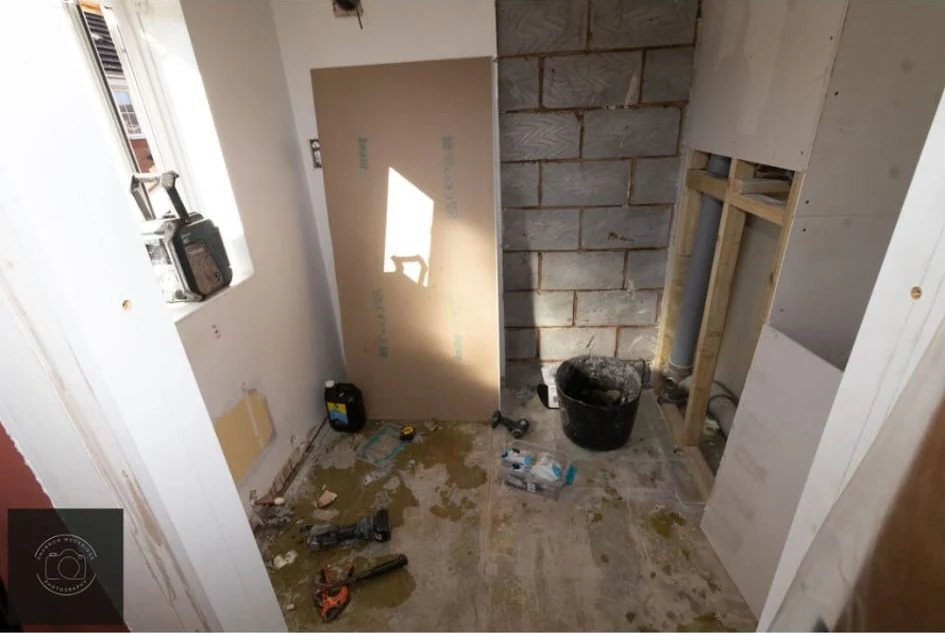
Just had a room replastered and wondering when you can put paint on it?
This page gives you the honest drying range, the colour test to check a wall yourself, and how to safely speed the process up.
Six things come up on a new-plaster job in Coventry, in the order they arrive.
- How can you tell if plaster is dry?
- How long does it usually take?
- What happens if you paint too early?
- Does a skim over old plaster dry faster?
- What goes on before the finish coats?
- How do you dry a room without cracking?
Call 024 7542 6652 today and speak to Ryan, the local decorator who covers new-plaster jobs across Coventry.
Reviews From Coventry Customers


The place is now like a new house.
I am immensely grateful for his expertise and dedication regarding his work.
Definitely recommend.
How Godiva Decorators Works
Godiva Decorators works with a local, Coventry-based painter and decorator. When you call, you speak to Ryan directly, and you arrange the quote and the work with him.
- Call and speak to Ryan — the decorator who does the work, not a call centre.
- Tell him about the job — the rooms, the timing and anything you are unsure about.
- He visits and sends a written quote setting out the work before anything is booked.
- You agree the work directly with Ryan, including the schedule and the final walkthrough.
Why Choose Godiva Decorators
The wall decides the start date
Work is booked around when the plaster is genuinely dry, not around a date that suits the diary.
Judged in daylight, on the whole wall
Readiness is checked by colour across the full face rather than by a meter reading in one spot.
A proper mist coat before anything else
New plaster gets a thinned coat first, so the finish coats hold.
Local to Coventry
Godiva Decorators is one local decorator covering Coventry.
How Can You Tell When Plaster Is Dry?
Painting too early ruins the finish, so it is worth knowing exactly what “dry” means. The face of the plaster dries first and always looks finished before the rest of the wall is. Every reliable test below checks the whole thickness, not just the face.
- Uniform colour, with no darker patches. This is the test that matters. Plaster goes from pink-brown to a pale, even, chalky colour. Any area still darker than the rest is holding water. That is usually the thickest sections, internal corners, or anywhere behind a radiator or cupboard.
- Check in daylight, not artificial light. A tungsten bulb flatters a damp patch out of existence. Look at the wall in the morning with the light across it rather than straight at it.
- Feel it with the back of your hand. Damp plaster is noticeably colder than dry plaster. Comparing the middle of a wall with a corner tells you more than touching one spot.
- The tape test. Tape a square of clear plastic tightly to the wall and leave it overnight. Condensation on the inside means the wall is still releasing moisture.
- A moisture meter is a guide, not a verdict. Readings on plaster vary with the surface and the meter. They are most useful for comparing one part of a wall with another, not as a pass mark.
The wall is ready when it is one even colour across its whole face, in daylight, and stays that way after a cold night. Not before.
How Long Does It Usually Take, and What Changes It?
A skim over sound existing plaster in a warm, ventilated room is often ready in a few days. A full float and set on a solid wall in an unheated house in winter can be several weeks. Both are normal, which is why a single number is the wrong answer.
What moves the drying time, in rough order of how much:
- Thickness. A 2 to 3 mm skim holds far less water than a full two-coat application on brick or blockwork. This is the biggest single variable.
- Ventilation. Moving air carries the moisture away. A closed room reaches a damp equilibrium and then more or less stops drying.
- Temperature. Gentle background warmth helps. Below about 10°C the process almost stalls.
- Time of year. Coventry is wettest in October, and carries high humidity through the winter. Air that is already damp cannot take much more moisture out of a wall. The same room plastered in June and in January is not the same job.
- What is behind it. Plaster on plasterboard dries faster than plaster on a solid wall, because the board is not also holding water.
- How many walls. A whole room plastered at once puts a lot of water into the air, and each wall dries slower than a single wall would.
The practical approach is to ventilate from day one, keep gentle background heat on, and judge readiness by the wall rather than by the diary. On a build programme this is planned as its own stage rather than absorbed into the decorating.
Get My Free Quote
Tell Ryan when your plaster went in and get a straight answer on timing.
What Happens If You Paint Too Early
Paint before a wall is genuinely dry and the problems that show up are not random. None of these are paint faults, and all of them are repaired by going back to the wall rather than by adding another coat.
Most common
Peeling in Sheets
Water leaving the plaster pushes the film off from behind. It often comes away in whole panels when masking tape is pulled, taking the mist coat with it, and the wall has to be scraped back and started again.
Cosmetic but permanent
Flashing and Patchy Sheen
Areas that were wetter absorb differently, so the finished wall dries to different sheens in patches. It shows most in daylight across the wall, and no amount of further coats reliably evens it out.
Recurring
Salting and Staining
Moisture moving out through the film carries salts from the background with it, leaving a white bloom or a brown stain that comes back through every coat until the wall is genuinely dry.
Structural
Trapped Damp in the Background
On a solid wall, sealing the surface before the wall behind has dried pushes the moisture somewhere else. The problem reappears at skirting level, or on the other side of the wall.
Every one of them costs more to put right than waiting would have cost, which is the whole argument for treating drying time as a stage of the programme rather than as a delay. Godiva Decorators works as decorators for new plaster across Coventry, timed to the wall rather than to a fixed date.
Get My Free Quote
Send Ryan a photo of the wall, and he will tell you if it is ready.
Does a Skim Over Old Plaster Dry Faster?
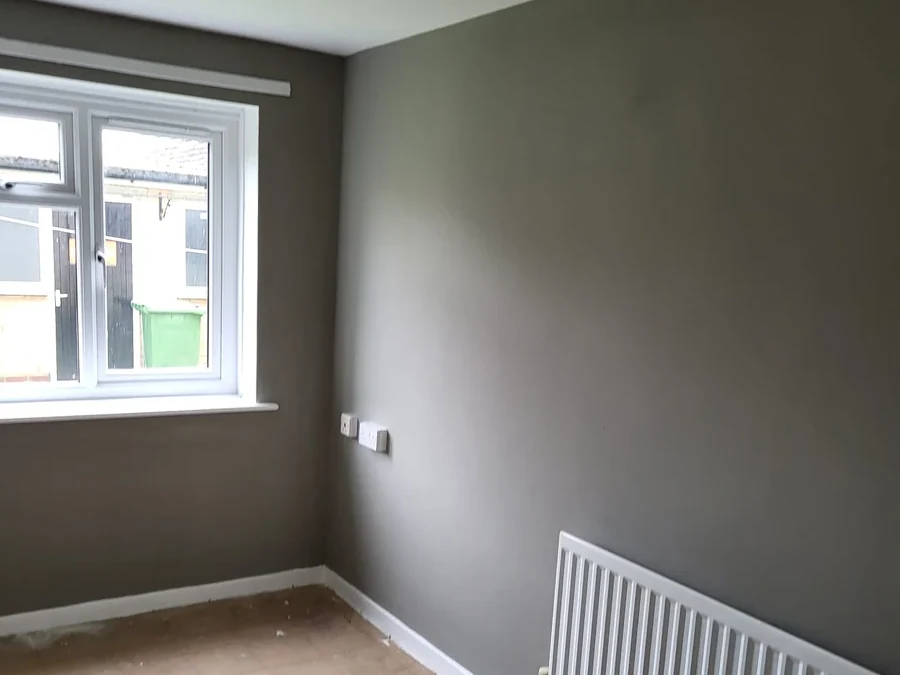
Yes, and the difference is large enough to plan around.
A skim over sound existing plaster is thin and the background is already dry, so it is often ready within a few days in reasonable conditions.
Plaster on new plasterboard is next fastest. The board absorbs very little, so almost all the water leaves through the face.
A full float and set on brick or block is the slow one. Both the plaster and the wall behind it are holding water, and on a solid Victorian wall that can be weeks rather than days.
Patches and making good dry faster than whole walls but often show longest, because a small area of new plaster in an older wall absorbs differently from everything around it even once it is dry. That is a sealing and coating question rather than a drying one.
Lime plaster is a separate case. It carbonates rather than simply drying, it takes considerably longer, and it needs a breathable finish when it is finally painted.
Working on a lime-plastered wall in an older Coventry property? The breathable-finish detail is on the page about painting a Victorian house.
What Goes On First, and Why Is It Not Ordinary Emulsion?
New plaster is porous and thirsty. A full-strength emulsion sits on the surface and dries before it has soaked in, which is why it peels off with the masking tape.
The first coat is therefore a mist coat. That is ordinary matt emulsion thinned with water so it soaks into the plaster and seals it. This gives the following coats something to hold on to. Skipping it is the second most common reason a wall on new plaster fails.
The exact ratio Ryan mixes it to, and the two products to avoid, is on the page about the mist coat ratio.
How Do You Dry a Room Out Without Cracking the Plaster?
Speeding it up is possible. Forcing it is what causes the cracking that then needs filling.
Ventilation first, heat second. Windows on the vent latch and internal doors open does more than turning the heating up, and it costs nothing. Moving air is what removes the moisture.
Gentle background warmth, not blasted heat. Central heating on low is ideal. A fan heater or a gas heater pointed at a wall dries the face far faster than the body behind it. That shrinkage difference is what cracks it.
Never a bottled gas heater in a room you are trying to dry. Burning gas produces water vapour, so it adds moisture to the air at the same time as it adds heat.
A dehumidifier is the best tool for the job. It removes water from the air continuously so the wall can keep releasing its own, and combined with gentle warmth it is far more effective and far safer than high heat.
Give it a day or two at the end without forcing anything. A wall that has been dried hard can look ready while the last of the moisture is still moving, and letting it settle before painting costs a day and saves a repaint.
Decorating a room that used to be a new extension? The crack at the join with the old house is on the page about decorating after an extension.
Get My Free Quote
Call 024 7542 6652 and speak to a decorator for new plaster in Coventry.
Painting After Plastering FAQs
Get My Free Quote
Fill in the form below for a free quote: