
What Order to Decorate a House Before You Move In


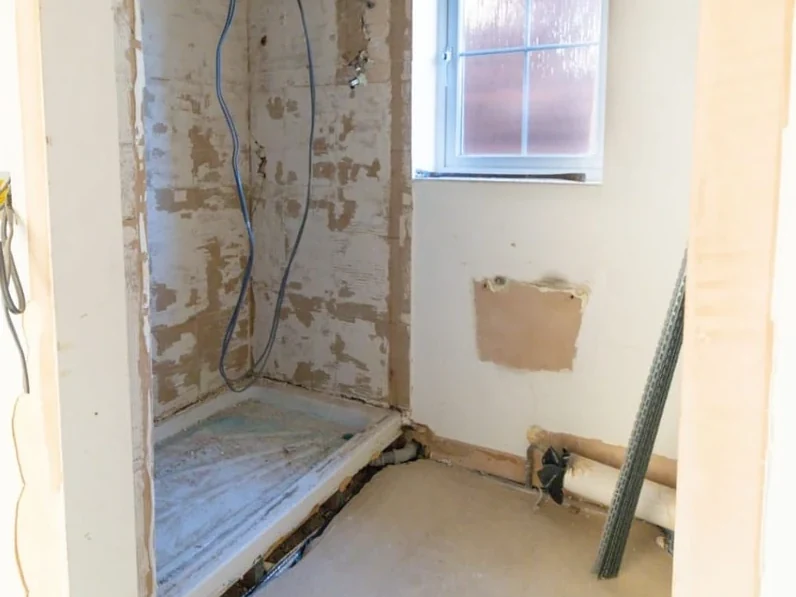
Got the keys to an empty house in Coventry and need to know what order the trades go in?
This guide sets out the full sequence, why decorating comes before flooring, and the two mistakes that cost the most.
It also covers where the kitchen and bathroom fit, and what changes in an occupied house. And it sets out how long each stage holds up the next one.
From the first trade on site to the last coat curing, the sequence has six parts.
- What order does everything go in?
- Why does decorating happen before flooring?
- Where do the kitchen and bathroom fit?
- Which ordering mistakes cost the most?
- What changes if you already live there?
- How long does each stage block the next?
Call 024 7542 6652 today and speak to Ryan, the local decorator who sequences empty-house jobs across Coventry.
Reviews From Coventry Customers
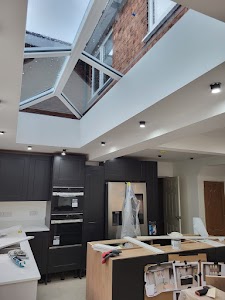


The place is now like a new house.
I am immensely grateful for his expertise and dedication regarding his work.
Definitely recommend.
How Godiva Decorators Works
Godiva Decorators works with a local, Coventry-based painter and decorator. When you call, you speak to Ryan directly, and you arrange the quote and the work with him.
- Call and speak to Ryan — the decorator who does the work, not a call centre.
- Tell him about the job — the rooms, the timing and anything you are unsure about.
- He visits and sends a written quote setting out the work before anything is booked.
- You agree the work directly with Ryan, including the schedule and the final walkthrough.
Why Choose Godiva Decorators
The sequence agreed before the first trade
Your decorator agrees the order before day one. Decorating sits against plastering, the kitchen and the flooring, so nothing gets redone.
One local decorating partner
Godiva Decorators uses one trusted decorator for Coventry and the areas around it.
Waiting periods built into the plan
Drying and curing time is written into the programme rather than discovered on the week the van is booked.
Skirting painted before the floor goes down
The finished edge is done in the open. The floor covering then meets a clean line, rather than a masked one.
What Order Does the Work Go In, Start to Finish?
Every trade on this list follows one simple rule. Work goes from the dirtiest trade to the cleanest, and from the top of the room to the bottom. Dust falls, paint runs and tools get dropped. Anything that makes a mess happens before anything that mess could spoil. That is why floors are last and ceilings are early, and it is the reason the order rarely changes from house to house.
The stages below assume an empty property. Not every house needs all of them, and a redecoration with no structural work starts at stage six.
Decorating an empty house before a move in Coventry? The local booking and timing detail is on the page about decorating before you move in.
| Stage | Why it sits here | |
|---|---|---|
| 1 | Structural work, damp and roofing | Nothing below survives water coming in from above |
| 2 | Rewiring, plumbing and heating | Chasing walls and lifting floors destroys finished surfaces |
| 3 | Windows and external doors | Fitting damages the reveals, which then need making good |
| 4 | Plastering and making good | The wet trade, and the one everything else waits on |
| 5 | Carpentry: skirting, architrave, doors | Fixed before painting, so it is painted in place |
| 6 | Decorating: ceilings, walls, then woodwork | Top down, and the last coat of woodwork is the real deadline |
| 7 | Kitchen and bathroom fitting | After the walls, before the final coat on the woodwork |
| 8 | Flooring | Second to last, so nothing is dropped on it |
| 9 | Carpets, blinds, light fittings, furniture | The clean trades, once the paint has hardened |
Two of those stages have a waiting period attached rather than just a duration. New plaster has to dry through before it takes paint, and fresh paint has to harden before anything rests against it. Both are covered further down.
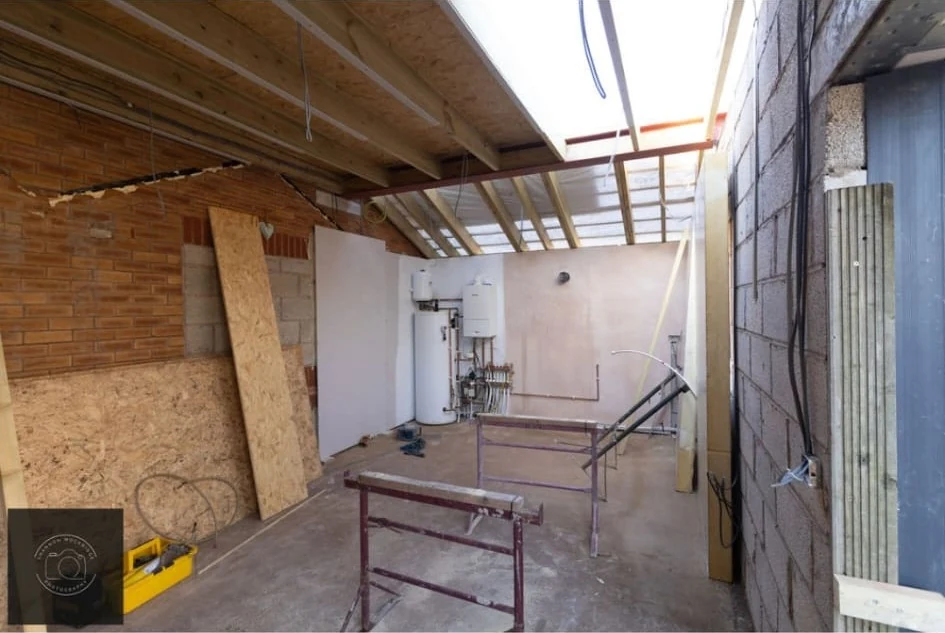
The order matters more the emptier the house is. In an occupied house the work is broken into rooms and the sequence repeats room by room. In an empty house it runs once, straight through, which is faster and cheaper. It also means a stage taken out of order is harder to absorb.
Godiva Decorators plans empty-house jobs in Coventry around the plaster, the kitchen and the floor. That way nothing gets redone.
Get My Free Quote
Talk the order through before the first trade is booked.
Why Does Decorating Come Before Flooring?
This is the one people argue about, and it is the single most common way an empty-house project goes wrong.
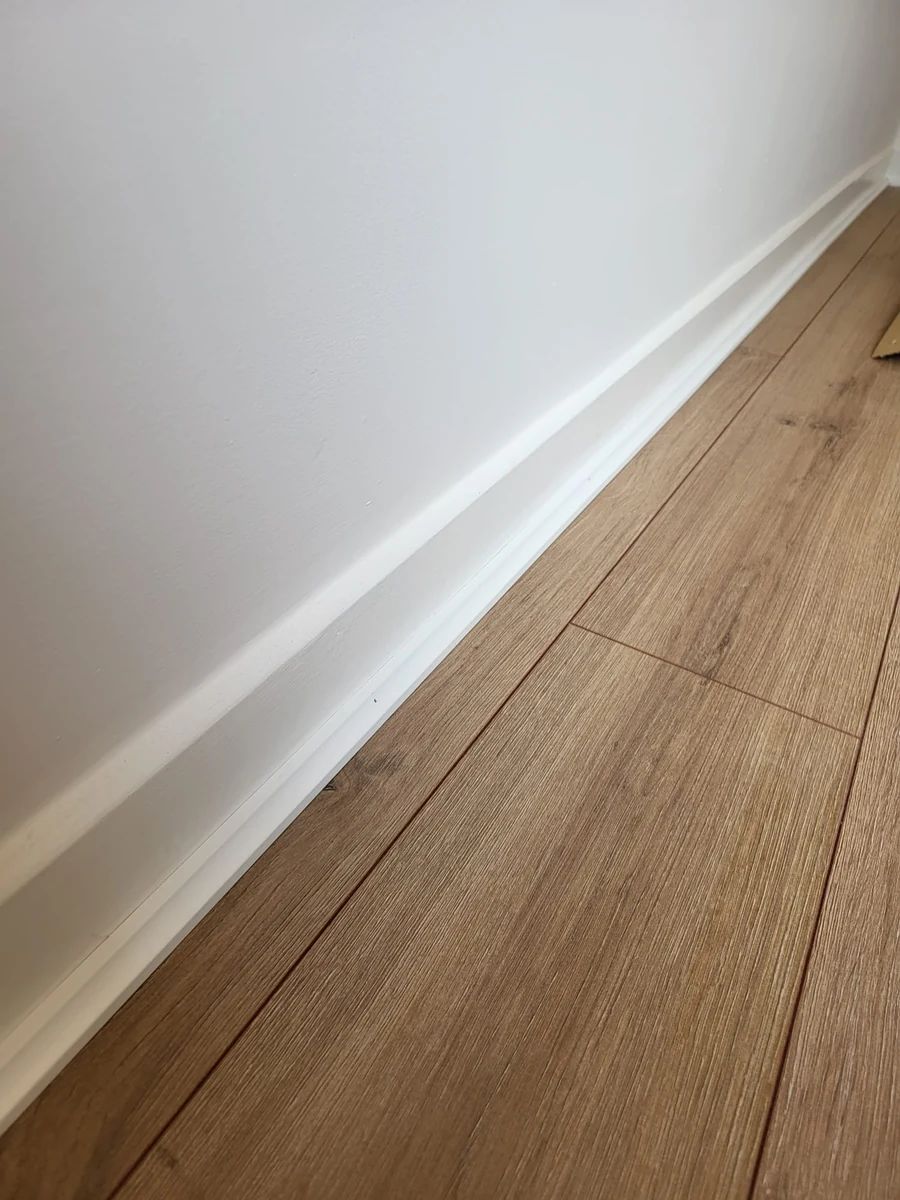
Decorating comes first, including the skirting boards. A skirting board is painted before the floor is laid. Painting one afterwards means cutting in along a finished floor with a brush. It also means masking the edge of a new carpet or laminate, and accepting a line that is never quite as clean. Painted first, the board is done in the open with nothing underneath it to protect.
The floor covering then goes down against a finished edge. The small gap that flooring always leaves is closed by beading or by the carpet gripper, both of which are meant to be seen. Doing it the other way round leaves the paint line permanently visible at the point in the room the eye travels to.
Three practical consequences follow from that:
- Order the flooring early, fit it late. Lead times on carpet and engineered board run to weeks. The fitting date is what everything else is planned against.
- Doors get hung before the floor and trimmed after. A new floor raises the level, and a door that cleared the old one may not clear the new one.
- Protection is not a substitute. Dust sheets and hardboard over a new floor work, but they do not survive a full decorating job. A scratch under a sheet is not found until the sheet comes up.
The exception is a floor being sanded and sealed rather than covered. Sanding a boarded floor throws a large amount of very fine dust, so it goes back into stage four with the wet trades. The sealing coat goes on afterwards, once the room is otherwise finished.
Where Do the Kitchen and Bathroom Fit?
Kitchens and bathrooms break the simple top-to-bottom rule. They are fitted trades working in a room that also needs painting, and the fitting itself marks the walls. The sequence that works is:
First
Ceilings and walls painted
Including behind where the units will sit. Two coats, finished, before anything is screwed to a wall.
Second
Units and sanitaryware fitted
Cupboards, worktops and bathroom ware go into a room that is already decorated.
Third
Tiling and splashbacks
Once the units define where the tiling stops, so nothing is cut twice.
Last
Final coat on the woodwork
Covering the knocks that fitting always leaves on architraves and skirting.
Painting the walls first looks wasteful, because some of it disappears behind cupboards. It is not. Cutting in around finished units, worktops and tiles takes far longer than painting an empty wall, costs more in labour than the paint saved, and produces a worse line. The paint behind the units also matters in a bathroom, where a wall that was left bare behind a vanity unit is the wall that shows moisture damage first.
Get My Free Quote
Ask Ryan how your kitchen or bathroom fits the sequence and get a written plan.
Which Ordering Mistakes Cost the Most?
Both of these are ordering mistakes rather than workmanship mistakes, which is why they are invisible until the work is finished.
Decorating over plaster that has not dried out. New plaster holds a large amount of water and has to lose it through the surface before it takes paint. Painted too early, the water is sealed in behind the film. What follows is patchy flat spots where the paint has been absorbed unevenly.
In the worst cases, it peels in sheets and the wall has to be stripped back and done again. Drying is measured in weeks rather than days on a solid wall, and it stretches in winter and in an unheated house.
The mist coat that goes on first is a separate matter, covered on the page about painting a wall after plastering.
Moving furniture in against paint that is touch-dry but not cured. The van is booked, the walls feel dry, and the wardrobe goes against the wall on the same day the decorator finishes. Uncured paint takes the shape of whatever presses into it, and the mark does not buff out.
The timings, by paint type, are on the page about how long to leave paint before the furniture goes back.
Underneath both is the same failure. A stage was started before the one before it had finished. The stage that got squeezed was the one with a waiting period rather than a visible task. Nothing appears to be happening while plaster dries or paint hardens. That makes it the part of the programme that gets taken out when a date moves.
What Changes If You Are Already Living There?
Most of these stages describe an empty house, and most decorating jobs start with people already living there. Most of the sequence survives. What changes is that it runs several times instead of once, and that the constraint is no longer the trades but the rooms.
Work runs room by room, not stage by stage. An empty house is decorated by stage: every ceiling, then every wall, then all the woodwork. An occupied house is finished one room at a time, so that the rest of the house stays usable. The same work takes longer for that reason alone.
The order within each room does not change. Ceiling, walls, woodwork, still top to bottom.
One room is kept clear as a store. Furniture from the room being worked on has to go somewhere, and moving it twice is worse than losing a room for the duration.
The rooms that cannot be lost go first or last. A kitchen, a bathroom and a child’s bedroom are the rooms a household cannot do without, and they are scheduled around rather than in the middle of the run.
Dust control replaces dust tolerance. In an empty house dust is swept up at the end. In an occupied one it has to be contained as the work goes, which means sheeting doorways. That is a real difference in the time a job takes.
The comparison worth making is not between decorating now and decorating later. It is between decorating an empty house once, straight through, and decorating the same house in six visits around a family.
Get My Free Quote
Tell Ryan which rooms you cannot do without and get a schedule built around them.
How Long Does Each Stage Hold Up the Next?
The useful number is not how long a stage takes. It is how long it blocks the stage after it, because that is what sets the date the house is usable.
| Stage | Blocks the next stage by |
|---|---|
| New plaster, before decorating | Weeks rather than days, and longer in winter or an unheated house |
| Mist coat on new plaster | Overnight before the first full coat |
| Walls and ceilings, between coats | 4 hours in a warm, ventilated room |
| Woodwork, between coats | 4 to 6 hours water-based, 16 to 24 hours oil-based |
| Last coat of woodwork, before flooring | 48 hours before fitters and kickers are in the room |
| Last coat of woodwork, before furniture | 48 hours water-based, 3 to 4 days oil-based |
The last coat of woodwork is the real deadline on any move-in schedule, not the last coat on the walls. Woodwork goes on last, takes the longest to harden, and is the surface that furniture touches.
Everything in that table stretches in the cold. Below about 10°C water-based paint effectively stops curing. An empty house being decorated in January wants background heating on throughout, not switched on at the end.
Want to know how long the whole job takes, by house size? That is on the page about how long it takes to decorate a house.
Order of Work FAQs
Get My Free Quote
Fill in the form below for a free quote: