
How Long Before You Can Move Furniture In After Painting


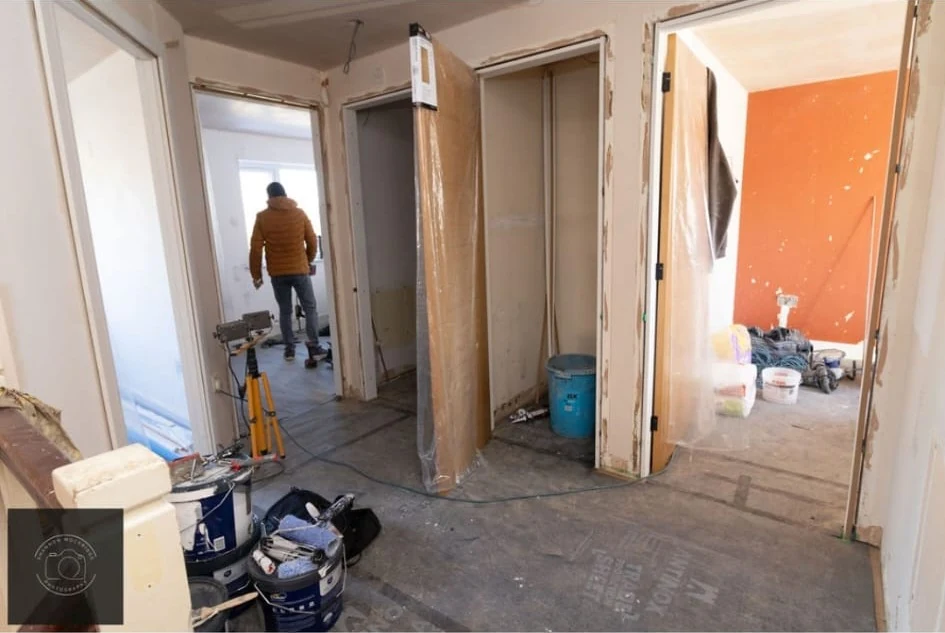
Moving day booked, and you’re wondering how long the paint needs before furniture goes back against it?
This page gives you the drying times by paint type and what counts as ready rather than just touch-dry. It also covers what happens if furniture goes back too soon, and whether the room is safe to sleep in straight away.
Emulsion, woodwork and gloss dry at three different speeds. Two more sections cover what happens if you rush a Coventry move.
- How long does paint take to dry, by type?
- What’s the difference between touch-dry and cured?
- What happens if you move furniture in too early?
- How do you plan the move backwards?
- Can you sleep in a freshly painted room?
Call 024 7542 6652 today and speak to Ryan, the local decorator who plans the drying time around your move.
Reviews From Coventry Customers


The place is now like a new house.
I am immensely grateful for his expertise and dedication regarding his work.
Definitely recommend.
How Godiva Decorators Works
Godiva Decorators works with a local, Coventry-based painter and decorator. When you call, you speak to Ryan directly, and you arrange the quote and the work with him.
- Call and speak to Ryan — the decorator who does the work, not a call centre.
- Tell him about the job — the rooms, the timing and anything you are unsure about.
- He visits and sends a written quote setting out the work before anything is booked.
- You agree the work directly with Ryan, including the schedule and the final walkthrough.
Why Choose Godiva Decorators
Timings built into the schedule
Your decorator plans the last coat of woodwork against your moving date, not the other way round.
One local decorating partner
Godiva Decorators works with one trusted decorating partner. He names low-odour products up front for a nursery or a room used straight away.
Products named before the work starts
The emulsion and the woodwork system are agreed at the quote stage. The drying window follows from that choice.
Low-odour options where they matter
A nursery, or a room used straight away, changes the specification. Mention it before the tins are bought and it gets built in.
How Long Does Paint Take to Dry, by Paint Type?
Drying time is set by what the paint is made of, not by how finished it looks. Water-based paints lose water to the air and set fast at the surface. That is why a wall can feel dry in an afternoon and still print under a bookcase three days later. Oil-based paints dry by oxidising: slower, smellier, and much harder at the end of it.
Woodwork sets the schedule, not the walls. It goes on last, and it is the surface things touch. A sofa sits against a skirting board, not against the middle of a wall.
Wondering where drying time fits into the wider order of work? That’s on the page about the order to decorate a house in.
The figures below are for a dry, ventilated room at about 18°C. Every one of them stretches in the cold, and a January job in an empty unheated house can take twice as long.
| What was painted | Touch-dry | Ready to recoat | Furniture against it | Fully hardened |
|---|---|---|---|---|
| Walls and ceilings, water-based emulsion | 2 to 4 hours | 4 hours | 24 hours | 5 to 14 days |
| Woodwork, water-based satin or eggshell | 1 to 2 hours | 4 to 6 hours | 48 hours | 7 days |
| Woodwork, oil-based gloss or eggshell | overnight | 16 to 24 hours | 3 to 4 days | 7 days or more |
| Radiators and metalwork | 2 to 4 hours | 6 hours | before heating on: 24 hours | 7 days |
| Newly plastered walls | see below | see below | 24 hours after the last coat | 5 to 14 days |
Decorating over new plaster? The wall has to dry before any of this starts, and that timing is on the page about painting after plastering.
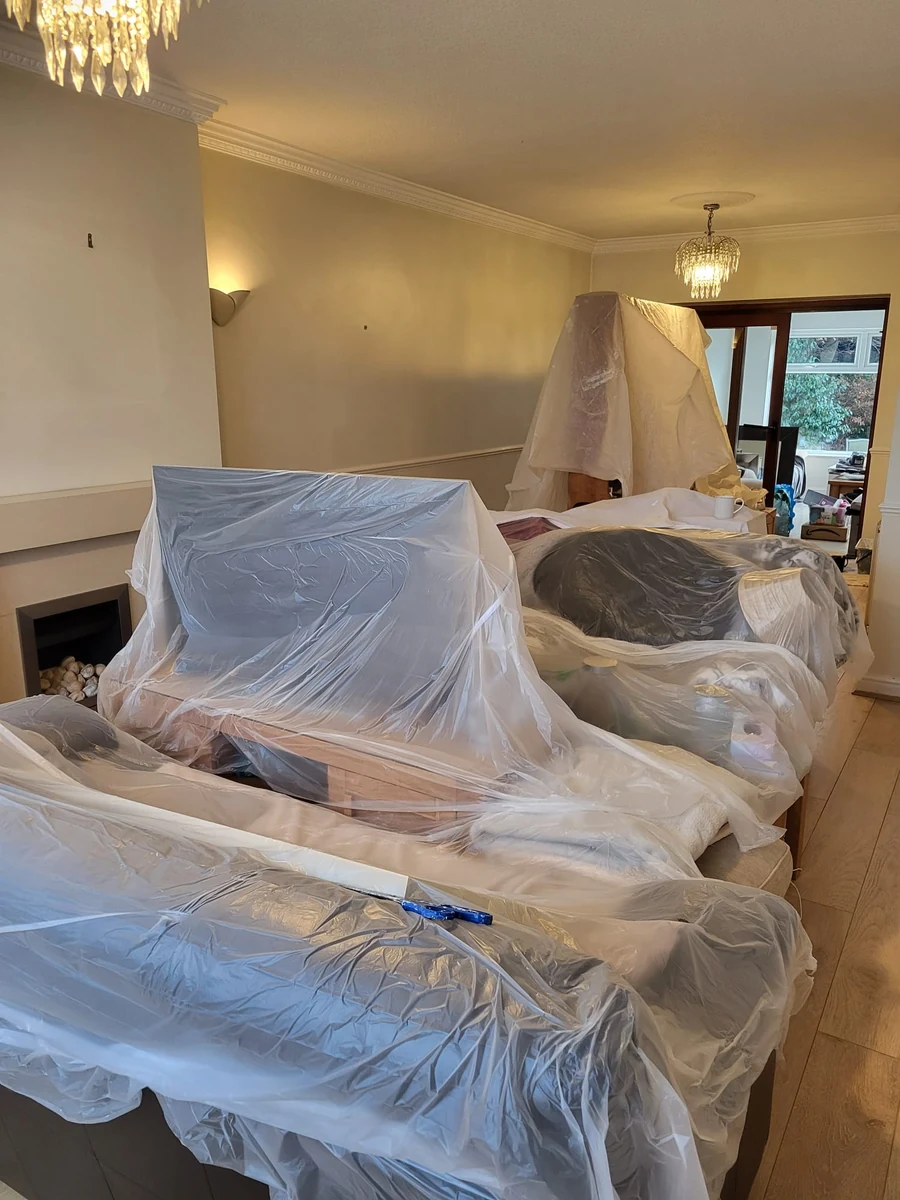
Touch-Dry, Ready to Recoat and Cured: What Is the Difference?
Almost every complaint that starts with the paint came off is a curing problem, not a paint-quality one. The three words below are the reason. They describe three different states, hours or days apart, and only the last one means finished.
Touch-dry means the very top of the film has set. A clean, dry fingertip laid flat leaves no mark. Nothing else is true yet.
Ready to recoat means the film is firm enough to take the next coat without dragging or lifting. This is the figure printed on the tin, and it is the one people mistake for finished, because it is the only number most tins put in large type.
Cured means the film has reached full hardness and stopped changing. On emulsion that is usually a few days to a fortnight. On water-based woodwork paint it is about a week. On oil-based gloss it is at least a week and sometimes longer in a cold room.
Everything in the first two stages is reversible. A wardrobe pushed against a wall on day one leaves a mark that does not buff out, because there is nothing hard enough to buff.
Godiva Decorators is the painter and decorator in Coventry who plans this drying window into your schedule. You do not have to guess it.
Get My Free Quote
Talk the timings through before the removal van is booked.
What Happens If You Move Furniture In Too Early?
Not a disaster, usually. A set of small, permanent marks, all of them avoidable. They sit in the places you look at most.
The common one
Blocking
Anything resting against uncured paint bonds to it slightly. Lifting it away pulls a thin layer of paint with it or leaves the fabric weave printed in the surface.
On matt walls
Sheen marks
Pressure polishes soft paint. A matt wall comes up shiny in a patch shaped like whatever leaned on it, and the shine does not fade.
On woodwork
Dents in the skirting
Metal or hard plastic furniture feet against half-cured woodwork leave dents that need filling and repainting rather than touching in.
On metalwork
Radiators turned on early
Heat on newly painted metal before it has hardened can yellow a white finish or leave the smell in the room for weeks.
Two more belong on the same list. Floor protection taped to a fresh skirting board, or masking left on too long, takes paint with it when it comes off. And boxes stacked tight to a wall for a fortnight stop the film breathing, so emulsion behind them stays soft and in a cold empty house it can bloom or mark. The pattern in all six is the same: pressure and contact, not time. An empty room can be left for two days with the windows on the vent and nothing goes wrong at all.
Get My Free Quote
Tell Ryan your moving date and get the two-day clearance built into the schedule.
How Do You Plan the Move-In Date Backwards?
The useful way round is to start with the day the van arrives and count back. Woodwork sets the schedule because it goes on last and takes the longest. The plan is built on the final coat of woodwork, not the walls.
Here is a three-bed house being decorated empty, with a Saturday move.
| Working back from moving day | What needs to have happened |
|---|---|
| Saturday, moving day | Furniture in, wardrobes against walls, beds made up |
| Friday | Nothing touching any painted surface. Windows on the vent |
| Thursday | Last coat on the woodwork. This is the real deadline |
| Wednesday | Last coat on walls and ceilings |
| Tuesday | First coats, and the woodwork undercoat |
| Monday | Preparation: filling, caulking, sanding, dusting off |
Two days of clearance either side of the woodwork is the part that gets squeezed, and it is the part worth protecting. If the move cannot shift, the fix is not to rush the drying. Paint the woodwork earlier in the week and the walls after it. That is the reverse of the usual order, but it costs nothing. Godiva Decorators plans the last coat of woodwork against your moving date, so the schedule works backwards from the day the van arrives.
Planning the whole move around an empty house, not just the drying days? That’s on the page about decorating before you move in.
If oil-based gloss is being used anywhere, add three days rather than one. If the house is cold and empty in winter, add two more.
Wondering how long the whole job takes in the first place? That’s on the page about how long it takes to decorate a house.
Can You Sleep in a Freshly Painted Room?
Whether you can sleep in a freshly painted room comes down to smell as much as anything else.
The smell fades on the same curve as the drying. It is solvent leaving the film. Water-based emulsion in a ventilated room is usually unnoticeable within a day and gone within two. Water-based woodwork paint takes two to three days. Oil-based gloss is the one that lingers, often for a week, which is why most decorators have moved away from it indoors except where a specific finish is wanted.
Ventilation matters more than time. A window on the vent latch and an internal door propped open clears a room several times faster than a sealed one. It speeds the drying as well.
Heat helps, but gently. Background central heating is fine. A fan heater pointed at a wall skins the surface before the film underneath has set, which causes the exact problem it was meant to solve.
Say it at the quote stage if someone is sleeping in there straight away. Low-VOC and low-odour products exist across every major range, and the tin carries the manufacturer’s own guidance on occupancy. Naming a nursery or an immediate-occupancy room up front changes which products get specified; saying it afterwards does not.
Get My Free Quote
Mention a nursery or an early move-in at the quote stage and get low-odour paint specified from the start.
Paint Drying FAQs
Get My Free Quote
Fill in the form below for a free quote: