Painting After Plastering · Guide
How Long After Plastering Can You Paint?


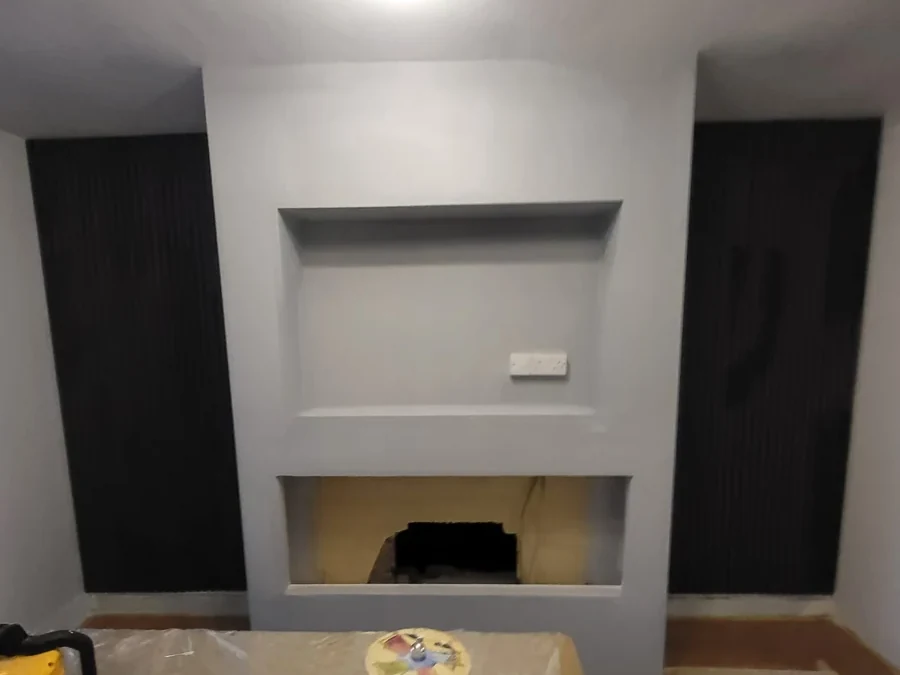
Just had a room replastered and wondering when you can put paint on it?
Most guides give a range, from about a week for a thin skim to up to four weeks for thick plaster. The colour of the wall is the real test. This page shows how to check it, what goes wrong if you paint too soon and what goes on first. Godiva Decorators puts Coventry homeowners in touch with Ryan, a local decorator who paints new plaster.
- How long after plastering can you paint?
- How can you tell if plaster is dry enough to paint?
- What happens if you paint plaster too early?
- What goes on after the plaster has dried?
Call 024 7542 6652 today and speak to Ryan, who checks new plaster before he paints it.


Drying Time
How Long After Plastering Can You Paint?
There is no single number. Most guides give a range, and where your wall lands in it depends on how thick the plaster is and what conditions it dries in.
Four well-known guides show how wide the range is. Dulux says plaster takes up to four weeks to dry completely. Screwfix gives the same four weeks as a safe rule, and adds that most plasterers find three days to a week is usually enough. Crown Paints says a week or two for finishing plaster. JT Atkinson says three to five days to dry fully, and recommends two weeks or more before painting.
A thin skim on a dry wall sits at the quick end. A thick coat in a cold, damp room runs to the slow end.
How long after a skim coat can you paint?
A skim is a thin finishing layer, so it holds little water. Screwfix puts thin applications at anywhere from three days to a week. Use the colour test below rather than counting days.
How long does thick or lime plaster take?
Thicker plaster holds more water and takes longer, up to the four weeks the guides quote. Crown Paints says lime plaster can take up to a month. Lime also needs a breathable finish, which the page on painting a Victorian house covers.
What slows plaster down?
- Poor airflow. Screwfix advises open windows and doors for airflow, and a steady temperature.
- Cold and damp weather. Screwfix says the wet months from October to March can slow drying. One plasterer’s blog says drying can stall if the room falls below about 10°C, which is a rule of thumb, not a hard limit.
- Thickness. Thicker plaster holds more water, so it takes longer to give it up.
Can you paint a new plaster patch next to an old wall?
Yes, once the patch is dry. Give the patch its own mist coat first, so it does not show as a dull patch. That is a sealing job, not a drying problem. Plastering a new extension? The join with the old house is on the page about decorating after an extension.
The Dry Test
How Can You Tell If Plaster Is Dry Enough to Paint?
A wall can look finished while it is still damp inside, so judge it by the wall and not the calendar. Three checks, used together, give a straight answer.
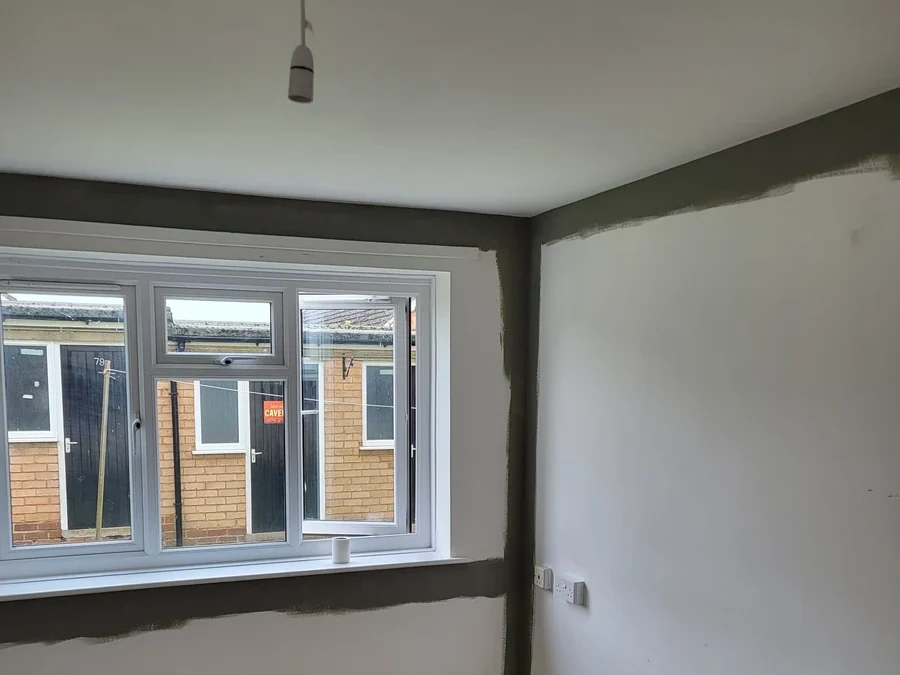
Check the colour
Wet plaster is dark brown or grey. Dry plaster is a pale, even pink. Screwfix, Crown Paints and JT Atkinson all use this test, and Crown describes the dry shade as pale salmon. Any darker patch is still damp. Thick areas and corners are usually the last to change.
Feel the wall
Dry plaster feels cool and solid. Damp plaster feels cold and slightly moist. Compare the middle of the wall with a corner, because that tells you more than touching one spot.
Look in daylight
Look at the wall in daylight, with the light running across it. Artificial light hides uneven colour. The wall is ready when it is one even shade from corner to corner. If you are in doubt, wait a little longer. JT Atkinson gives the same advice.
Too Early
What Happens If You Paint Plaster Too Early?
Paint plaster that is still damp and the same problems come up in every guide. None of them is a fault in the paint, and extra coats do not cure them.
Most common
Peeling and Flaking
Moisture still in the plaster stops the paint sticking. Dulux and Screwfix both warn that it can peel or flake off. The fix is to remove the failed paint and seal the wall again.
Structural
Cracking
Screwfix warns that painting over wet plaster leads to cracks. Cracks then need filling and repainting.
Cosmetic
Patchy Finish and Streaks
Wetter areas take paint differently from drier ones. The finished wall can dry in patches and streaks, and it shows most in daylight.
Health
Mould
Crown Paints warns that paint on damp plaster can flake, peel or even grow mould. That is one more reason to wait for the colour to even out.
Waiting a few more days costs far less than stripping the wall back and starting again.
Get My Free Quote
Speak to Ryan about your new plaster and get a straight answer on timing.
How It Works
How Godiva Decorators Works
Godiva Decorators works with a local decorator based in Coventry. When you call, you speak to Ryan, and you arrange the quote and the work with him.
1
Call and speak to Ryan
He is the decorator who does the work.
2
Tell him about the plaster
Say which rooms have new plaster and when it went on.
3
He visits and sends a written quote
The quote sets out the work before anything is booked.
4
You agree the work directly
You agree the start date with Ryan, and the wall being dry decides it.
Drying It Out
How Do You Dry Plaster Faster Without Cracking It?
You can help plaster dry, but forcing it causes the cracks you then have to fill. Gentle and steady works better than hot and fast.
Does a dehumidifier help plaster dry?
Yes. Screwfix lists a dehumidifier as a way to speed up drying. One plasterer’s blog calls it the safest way to dry plaster quicker. Keep windows and doors open for airflow too.
Can you use a heater to dry plaster?
Gentle background heat is fine. Dulux says a heater or an open window can speed things up. One plasterer’s blog warns against direct heat, because a fan heater can dry the surface faster than the plaster behind it and crack it, and it says to avoid bottled gas heaters. That is one source, so treat it as cautious advice and ask your plasterer.
What temperature should the room be?
The same blog suggests keeping the room above about 10°C overnight, because drying can stall in the cold. Treat that as a rule of thumb. Painting is a different job from drying, so the timing is agreed with Ryan once the wall passes the colour test. For the painting itself, see interior painting or the wider house painting service.
Before the Finish Coats
What Goes On After the Plaster Has Dried?
New plaster is porous, so it is not painted like an ordinary wall. Five steps take it from dry plaster to finished colour.
1
Check the wall is dry
The colour is one even pale pink across the whole wall, checked in daylight.
2
Clear the dust
Lightly sand any rough patches, then wipe or vacuum the dust off. Plaster dust spoils a paint finish.
3
Apply the mist coat
A mist coat is emulsion thinned with water. Dulux says it soaks into the plaster and seals it, so the next coats stick. Full-strength emulsion straight onto new plaster can peel.
4
Let the mist coat dry
JT Atkinson says one is usually enough. Very porous plaster may need a second. Let each dry before the next.
5
Paint the finish coats
Most walls need two coats of finish emulsion for even coverage, again according to JT Atkinson.
The mist coat mix depends on the paint, and the guides differ. Dulux suggests ten parts paint to one part water, and Crown Paints suggests six to four. The page on the mist coat ratio explains how to read the tin. Painting new plasterboard in an extension or loft? The plasterboard painting page covers it.
Have Ryan Check Your New Plaster
Ask for a free quote to paint your newly plastered room.
Questions
Painting After Plastering FAQs
Get My Free Quote
Fill in the form below for a free quote: