
Landlord and HMO Decorating in Coventry


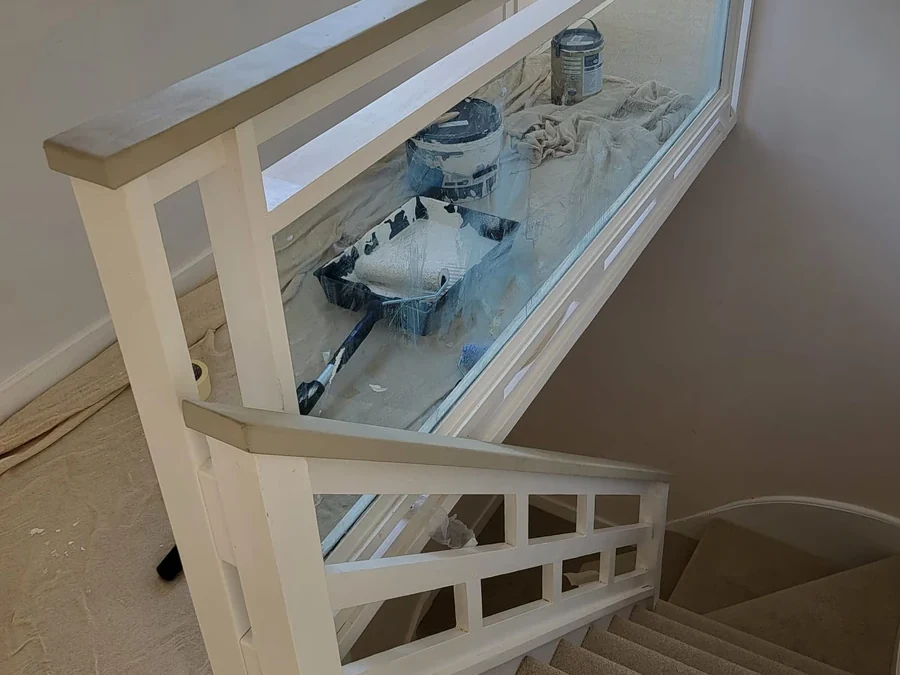
Landlord or letting agent with a rental or HMO turnaround to schedule before the next tenancy moves in?
This guide covers the practical side of a rental or HMO turnaround — timing, priorities and the local rules that affect it.
This guide covers six things every landlord or letting agent turning round a Coventry rental needs to know.
- How often does a rental need redecorating?
- When should I book the summer turnaround?
- What do HMO communal areas need?
- Which Coventry rules affect an HMO?
- What is a landlord’s own duty to decorate?
- Where does the tax line sit?
Call 024 7542 6652 today and speak to Ryan, the local decorator who covers landlord and HMO turnarounds across Coventry.
Reviews From Coventry Customers


The place is now like a new house.
I am immensely grateful for his expertise and dedication regarding his work.
Definitely recommend.
How Godiva Decorators Works
Godiva Decorators works with a local, Coventry-based painter and decorator. When you call, you speak to Ryan directly, and you arrange the quote and the work with him.
- Call and speak to Ryan — the decorator who does the work, not a call centre.
- Tell him about the job — the rooms, the timing and anything you are unsure about.
- He visits and sends a written quote setting out the work before anything is booked.
- You agree the work directly with Ryan, including the schedule and the final walkthrough.
Why Choose Godiva Decorators
Booked around the changeover, not around us
Turnaround dates are held in advance. The work lands in the gap between tenancies rather than across it.
Communal areas specified harder than bedrooms
Stairwells and hallways get a durable spec. They get proper access equipment too, because they wear several times faster.
A written scope and dated photographs
You get a record of what was quoted and what was done. That is the factual half of any later conversation about condition.
Local to Coventry
Godiva Decorators works with one trusted decorator across Coventry. That covers landlord and HMO work, including its HMO wards.
How Often Does a Rental Need Redecorating?
There are two versions of this question and they have different owners. What a landlord is legally obliged to do is tenancy law, and the clear answer to it is Shelter. What a property physically needs is a decorating question, and that is the one answered here.
In practice, wear runs at very different rates in different parts of the same house:
- Communal stairwells and hallways in an HMO: every one to two years. Every occupant passes through them several times a day with bags, bikes and furniture. Nothing else in the building wears at this rate.
- Kitchens and bathrooms: every two to three years. Heat, steam and cleaning products, and the surfaces most often scrubbed.
- Bedrooms and living rooms: every three to five years. Usually touch-ups and marks rather than a full repaint, provided the original product could be cleaned.
- Woodwork and doors: every four to six years. Doors, frames and skirting take knocks rather than dirt, so they fail by chipping rather than by staining.
The single biggest variable is not the tenants. It is which product went on last time. A wall that cannot be cleaned has to be repainted instead of just refreshed.
Choosing a paint that will not need this again? The detail is on the page about the best paint for rentals and HMOs.
When Should a Summer Turnaround Be Booked?
Student tenancies in Coventry end in late June and July and the new ones start in September. Everything that needs doing to a student property happens in that gap. That means every landlord in the city is asking the same decorators for the same six weeks.
Book the window, not the job. The scope is rarely known until the tenants are out and the property has been checked. The dates can still be held in advance. Landlords who ring in spring get the slot; landlords who ring in July are working around whoever booked in spring.
Sequence the portfolio rather than the property. With more than one changeover, running the properties back to back in an agreed order is faster than trying to do them in parallel. It also means one set of equipment moves once per property, not several times.
Get the clearance and repairs in first. Rubbish removal, any plastering, and anything a contractor needs to chase into a wall all come before the decorating. Decorating done first is decorating done twice, and in a six-week window there is no room to do anything twice.
Capacity is confirmed on the call, not promised on a page. How many properties can genuinely be turned round in a given week depends on what else is booked. A number published here would be a promise rather than a fact. Ask when you call and you will get the real answer for your dates.
Get My Free Quote
Speak to Ryan about your changeover dates and get the window held.
HMO Communal Areas, Stairwells and Hallways
Where a budget cannot stretch to every room, the question is which part of the building does the most good. Coventry has roughly 6,500 HMOs, about five per cent of the housing stock. Over two thirds of them are smaller terraces. In every one of them, the communal route through the building wears fastest. It is also the part a viewing is decided on. Godiva Decorators gives communal areas a harder spec than bedrooms. It does that on every rental and HMO turnaround.
Highest wear
The Route Through the Building
Front door, hall, stairs and landings take every occupant, every delivery and every piece of furniture that has ever been moved in. They need a harder specification than the bedrooms, not the same one.
Access
Stairwells Are a Scaffolding Job
A stairwell in a terrace is often three storeys of wall reached from a staircase. It needs proper access equipment rather than a ladder on a step. That is a real cost and it belongs in the quote rather than in a surprise.
Occupied work
Doing It With Tenants In
Communal areas often have to be decorated while the building is occupied. That means one flight at a time, the route kept passable, and fire doors and escape routes never obstructed. It is slower than an empty run and it is quoted that way.
Worth doing first
It Is What Lets the Rooms
A prospective tenant forms a view of the building in the first ten seconds, in the hall. Where a budget only covers part of a property, the communal route is where it does the most work.
Fire doors, fire-door specifications and anything else covered by fire safety requirements are set by the council and the relevant safety guidance rather than by a decorator, and any painting of them follows that specification rather than overriding it.
Which Coventry HMO Rules Affect the Work?
Two are worth knowing about before planning work. Both change what a property may be used for, not how it is decorated.
An HMO Article 4 Direction has been in force since 30 September 2023 across eleven wards: Cheylesmore, Earlsdon, Foleshill, Lower Stoke, Radford, St Michael’s, Sherbourne, Wainbody, Whoberley, Tile Hill and Canley, and Upper Stoke. It removes the permitted development right to convert a family home into a small HMO in those wards. A conversion there now needs planning permission.
City-wide Additional HMO Licensing applies to properties with three or four occupiers. Licences run for a fixed term and carry a renewal fee; the current dates and fee are published on the council’s own licensing page below. Licensing conditions cover the condition of the property, which is the point at which decorating and a licence meet.
What that means for the decorating itself. Very little directly. What it changes is the order. A property being converted or licensed should have its permissions and its licence position settled before the decorating is booked. A scope written for one use and then changed is a scope paid for twice.
The council publishes both in full at coventry.gov.uk.
Licensing and planning questions belong there rather than with your decorator.
Get My Free Quote
Speak to Ryan about your HMO’s licence position and get a written quote once it is settled.
What Is a Landlord’s Own Duty to Decorate?
Article 4 and licensing are about what a property may be used for. One rule is about the decorating itself.
The manager of an HMO has a legal duty to keep its common parts in good decorative repair. That duty sits in the Management of Houses in Multiple Occupation (England) Regulations 2006. It applies whether or not the property needs a licence.
It covers the shared spaces, not the let rooms. Hallways, stairs, landings and any shared kitchen or bathroom are within it. A tenant’s own room is not.
What that means in practice. The route through the building already gets a harder specification for wear. Keeping it in good decorative repair is a legal duty for the manager, not only a maintenance choice.
The regulation itself is published in full at legislation.gov.uk. What it requires for a specific property is a question for the council or a solicitor rather than for a decorator.
What Does the Warwick Standard Require of Landlords?
Landlords on the university’s accredited route work to its published standard requirements. That document is unusually direct about decorating.
It states that landlords undertake all painting. Students may not redecorate. Redecoration counts as planned maintenance, agreed between the student, the landlord and the university.
That has three practical consequences. Painting is not a job that can be handed to a tenant in exchange for rent. Redecoration is planned rather than reactive, which means it belongs in the summer window along with everything else. And marks that a tenant might otherwise have painted over themselves come back to the landlord at the end of the tenancy.
The requirements are published in full by the University of Warwick. Anything about accreditation or the terms of a particular tenancy is a question for the university, not for a decorator.
Evidence at the end of a tenancy. What counts as fair wear and tear is defined by the deposit schemes rather than by trades. The Tenancy Deposit Scheme publishes its own guidance, and its adjudicators apply it. What a decorator can supply is the factual half: a written scope, dated photographs from before the work, and an invoice for what was done.
Get My Free Quote
Speak to Ryan about your student let and get the summer window booked in.
Where Does the Tax Line Sit?
A landlord doing this work will often want to know whether it can be set against rental income. That is a question for HMRC and your accountant rather than for a decorator. Here is where the general line sits.
Repairs and maintenance are generally allowable against rental income. Improvements generally are not. Redecorating a property to the standard it was already at usually sits on the first side of that line. Upgrading it to a different standard usually does not.
The current guidance is published by HMRC, and how it applies to your circumstances is a question for your accountant. Godiva Decorators does not give tax advice and nothing here is any. What we can give you is an invoice that describes the work clearly enough for your accountant to place it.
Landlord and HMO Decorating FAQs
Get My Free Quote
Fill in the form below for a free quote: